
Published: 10 September 2026 | Last updated: 10 September 2026 | UK Travel Security Desk
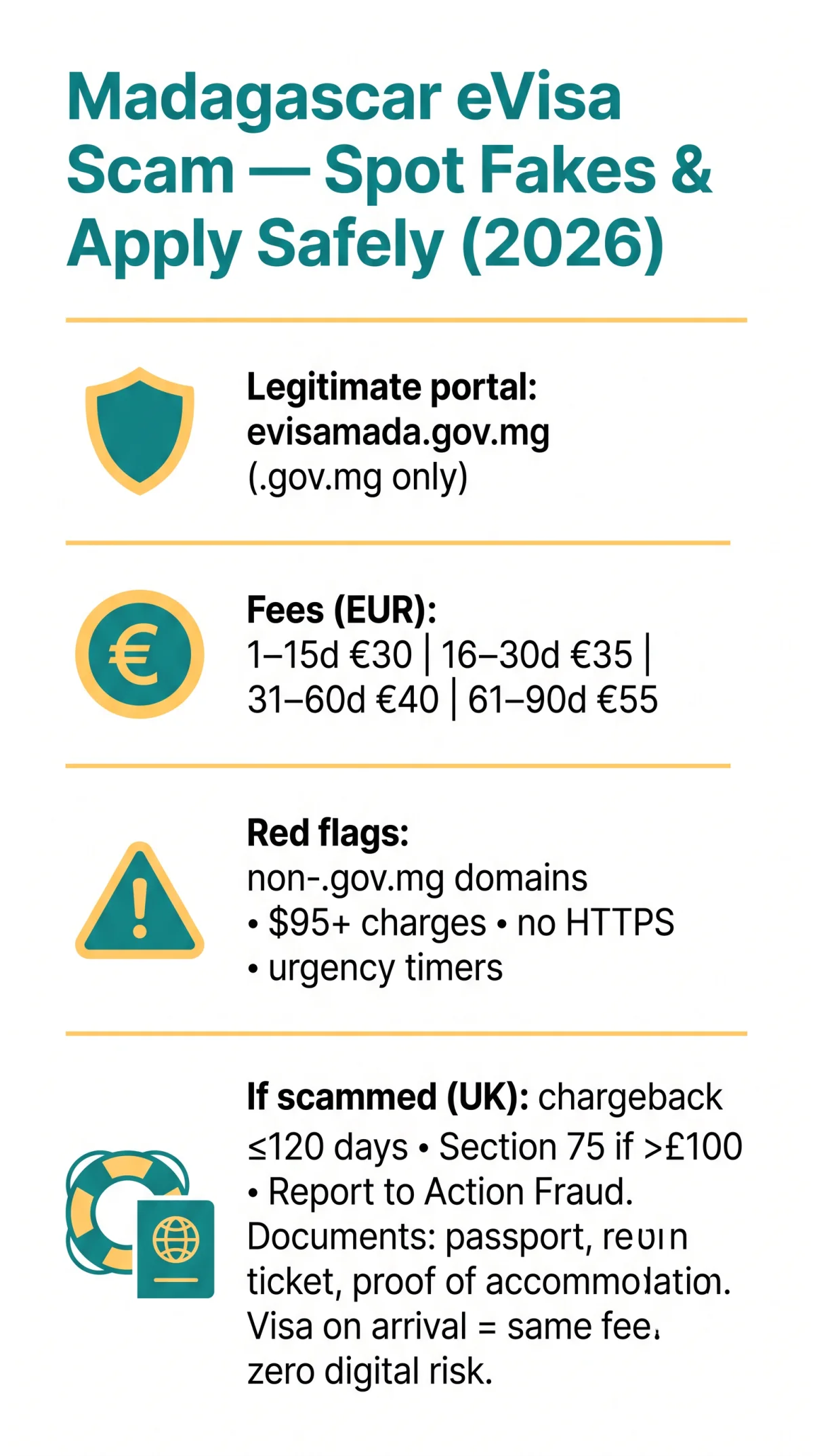
The official Madagascar eVisa portal is evisamada.gov.mg (.gov.mg TLD). Official fees: €30 (1-15 days) to €55 (61-90 days). Any site charging $95+ (e.g., ) or lacking .gov.mg is a third-party aggregator or Madagascar eVisa scam. UK victims have 120-day chargeback rights and Section 75 protection for payments over £100.
What Is the Madagascar eVisa Scam and Why Does It Matter?
A Madagascar eVisa scam uses fake websites and phishing emails posing as the Malagasy government to steal passport data and charge inflated fees. On 14 Apr 2026, a Tripadvisor user reported being “worried about scam/3rd party sites” when choosing between a Madagascar eVisa and visa on arrival. The informational site warns: “Beware of scam sites, some may overcharge you on the visa fee.” Risks include financial loss, identity theft from stolen passport scans, and denied boarding if a Madagascar eVisa approval is fraudulent.
The Only Legitimate Madagascar eVisa Portal – How to Verify It
The sole legitimate Madagascar eVisa portal is evisamada.gov.mg using the .gov.mg TLD. Any .com, .org, or .net domain is a third-party aggregator or scam. The site is informational only (copyright 2026) and links to the official site but is NOT the application portal. The aggregator (Travel Rox Inc., Delaware) charges $95+ and openly states it is “not affiliated with, endorsed by, or connected to any government.”
Verify any Madagascar eVisa URL with this 6-point checklist:
- TLD: .gov.mg only; any .com or .org = aggregator
- SSL certificate: issued to a Malagasy government entity
- WHOIS registrant: must be a Malagasy government body
- HTTPS only: no HTTP fallback
- No typosquatting: and are not the verified government website
- No paid ad label in Google search results
All nationalities are eligible for the Madagascar eVisa (tourist, single entry, maximum 60 days online). The platform requires a telephone and is available in English.
How to Spot a Fake Madagascar eVisa Website – Red Flags Checklist
A fake Madagascar eVisa website is identified by non-.gov.mg domains, unverifiable badges, and forced upsells. Recognise these Madagascar eVisa scam red flags before entering personal data:
- Domain TLD: real portal = .gov.mg; is informational (copyright 2026), NOT the application site
- Payment recipient: fees in EUR to a government body; billing Travel Rox Inc. (169 Madison Ave STE 2883, New York, NY 10016, US) = aggregator
- Price inflation: charges $95+; VisaHQ pricing is undisclosed but historically exceeds government rates
- Urgency: countdown timers pressuring immediate checkout
- Disclaimers: buried “not affiliated with any government” fine print confirms a third-party intermediary
- SSL: no HTTPS padlock or certificate issued to a Malagasy entity signals a clone site for Madagascar eVisa
- Reviews: TrustScore 3.9 (2,147 reviews); VisaHQ 4.40 (4,207 reviews on ) – neither is a government portal
- Sponsored ads: paid Google results impersonating the official site
Madagascar eVisa Fees – Official Tariffs vs. Third-Party Markups
Official Madagascar eVisa fees are listed in EUR and are identical to visa-on-arrival prices at Ivato International Airport. Fees as published on evisamada.gov.mg:
| Duration | Government Fee (approx.) | Online eVisa? |
|---|---|---|
| 1-15 days | ~€30 | Yes |
| 16-30 days | ~€35 | Yes |
| 31-60 days | ~€40 | Yes (maximum online) |
| 61-90 days | ~€55 | No – consular or in-country extension only |
The all-inclusive price of $95+ represents a 60-200% markup above the statutory Madagascar eVisa fee. The official portal accepts bank card only – no crypto, no wire transfers.
Phishing Emails and Social Media Scams Targeting Madagascar eVisa Applicants
Madagascar eVisa phishing scams use spoofed sender addresses and “visa expiring” or “application incomplete” urgency. No legitimate Malagasy authority sends unsolicited payment emails – the official process requires a telephone, not email-based payment. A phishing link in text or ad will rarely show .gov.mg on hover. Signs of a Madagascar visa phishing scam: spoofed sender domains, PDF attachments with malware, and social media ads on Meta or Google directing to non-government domains. The AEV is delivered within 72 hours maximum – any email claiming faster processing is a scam. Protect your Madagascar eVisa application by checking sender domain (must end .gov.mg), hovering over links, and never opening unsolicited attachments.
What to Do If You Paid a Fake eVisa Website
Madagascar eVisa scam victims in the UK have specific legal protections under consumer credit regulations. Act quickly:
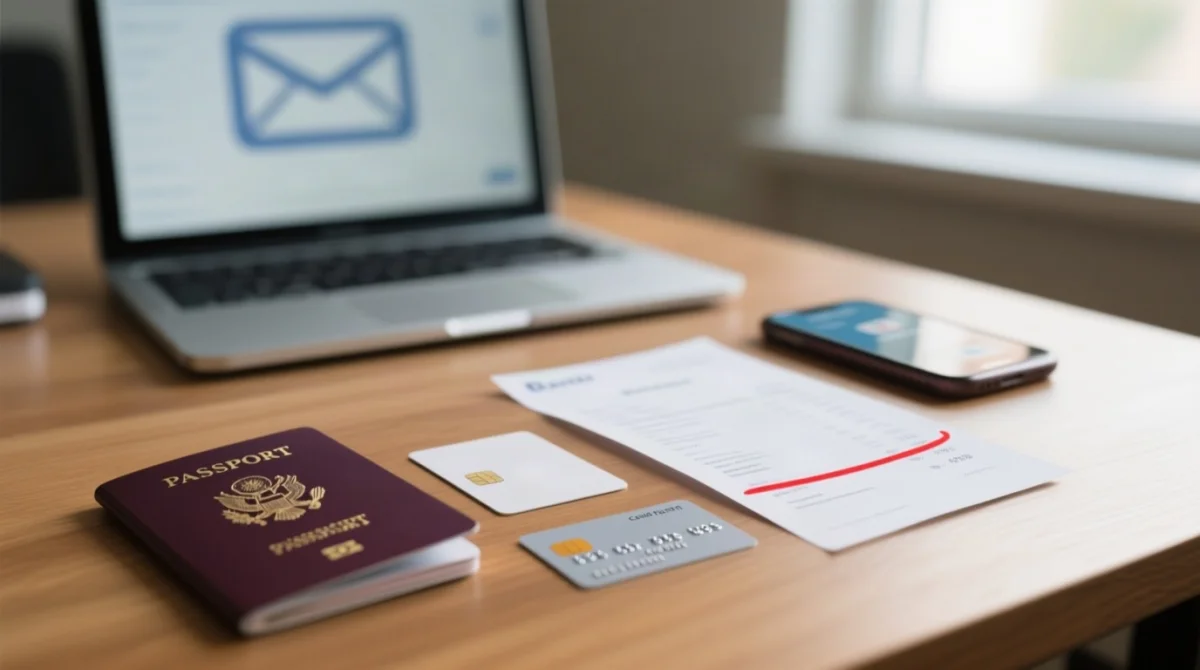
Visa/Mastercard chargeback
Request a chargeback within 120 days of the transaction date.
Section 75 claim
If you paid over £100 on a credit card, file a Section 75 Consumer Credit Act claim.
Report to Action Fraud
Report the scam to Action Fraud for a chargeback case reference.
Forward phishing emails to NCSC
Send phishing emails to the NCSC at ncsc.gov.uk.
Report the scam website URL
Report the URL to ICANN and Google Safe Browsing.
Replace passport & set fraud alerts
If your passport scan was submitted, replace it via HM Passport Office and set fraud alerts with Experian and Equifax.
Expected timelines: chargeback 4-8 weeks, replacement passport approximately 10 weeks. Madagascar eVisa scam recovery is possible if you act quickly.
Visa on Arrival vs. eVisa – Is the On-Arrival Option Safer?
Madagascar visa on arrival uses identical government fees to the eVisa, with no third-party markup, processed at eVisa counters at Ivato International Airport in Antananarivo. You need a passport, return ticket, and proof of accommodation. The trade-off is a longer queue at the airport, but it eliminates all digital scam risk. Fees match the official Madagascar eVisa tariff: ~€30 (1-15 days) to ~€55 (61-90 days). If you are concerned about a Madagascar eVisa scam, visa on arrival is the zero-risk alternative.
Frequently Asked Questions: Madagascar eVisa Scam and Secure Application
Is the visa on arrival safer than the eVisa?
Identical fees, no markup, at Ivato Airport counters. Requires passport, return ticket, accommodation. Zero digital scam risk.
How can I check if my eVisa approval is genuine?
AEV delivered within 72 hours. Present printed or on smartphone. Verification at police control. Confirm via evisamada.gov.mg.
Who can apply for the Madagascar eVisa?
All nationalities. Tourist visa only, single entry, maximum 60 days online. Requires telephone. Available in English.
How long does the Madagascar eVisa take to process?
Maximum 72 hours after enrollment. Apply 1 week to 6 months before departure. Three steps: account, bank card, download.
How do I identify phishing emails about my eVisa?
Spoofed sender, “visa expiring” urgency, PDF malware. Sender must end.gov.mg. Never open unsolicited attachments.
Is Madagascar safe for tourists right now?
Consult FCDO travel advice for Madagascar. This guide covers digital safety: protecting passport data from eVisa scams.
How do I report a fake Madagascar eVisa website?
Report to Action Fraud , NCSC (ncsc.gov.uk), ICANN, and Google Safe Browsing.
What payment methods does the real eVisa portal accept?
Bank card only. No crypto, wire transfers, or Western Union. Look for 3D Secure and SSL.
This article is for informational purposes only and does not constitute legal or financial advice. All information was independently verified against evisamada.gov.mg as of September 2026. We are not affiliated with any visa processing service.